Mornington Street Bridge to re-open

Mornington Street Bridge is set to re-open to cars on Sunday 01 November 2026, following works by HS2.

Oxford Street has been pedestrianised

Oxford Street is now completely traffic free between Orchard Street and Great Portland Street (i.e. between Selfridges and IKEA). There are no buses, taxis, bicycles, scooters or pedicabs allowed.

This has meant a big change to bus routes around Oxford Street.

While temporary barriers have gone up, and bus stops have been taken down, more permanent landscaping will be done over the next few months.

Click on the links for more information.

Complaints about Kentish Town bus stop

This busy bus stop in Kentish Town has caused a lot of complaints since the construction hoardings were put up and the previous car wash was demolished. The construction hoardings greatly narrow the footpath, making it very hard for people to get past. And people are often splashed by the passing traffic.

The hoardings went up in about 2022, after planning permission was granted in 2019 for new flats on the site. And still works haven’t started on the site.

The developer hiopes to finish building in 2028. So it looks like the disruption will stay for a few more years yet.

Pedicab rules to change

Transport for London (TfL) has released plans to limit how much pedicabs can charge.

The proposals include:

  • maximum £1 per minute charge (other charges will be allowed but also limited)
  • Licensing scheme for pedicab drivers
  • Regular safety checks on pedicabs

The end of the noisy London pedicab by Jim Waterson

Plus: Crouch End at war over Hornsey town hall arts centre, the Labour > Green defection machine continues, Catford’s cursed cinema comfort, and an incredibly expensive suburban house.

Read on Substack

London Councils reviewing Freedom Pass

London Councils, a group made up of all the London Borough Councils and the City of London, is reviewing the Freedom Pass, which allows people over 66 to travel for free on buses and trains after 9:30 a.m. (a separate scheme is run by Transport for London for people aged 60-65).

With an aging population, the cost of the scheme is rising – it currently costs £333 million per year – and London Councils is looking whether the conditions should be changed, or even whether the scheme should be stopped.

Understandably, this is facing a lot of opposition, including from charities and Camden Council. A petition has been started that has more than 88 000 signatures.

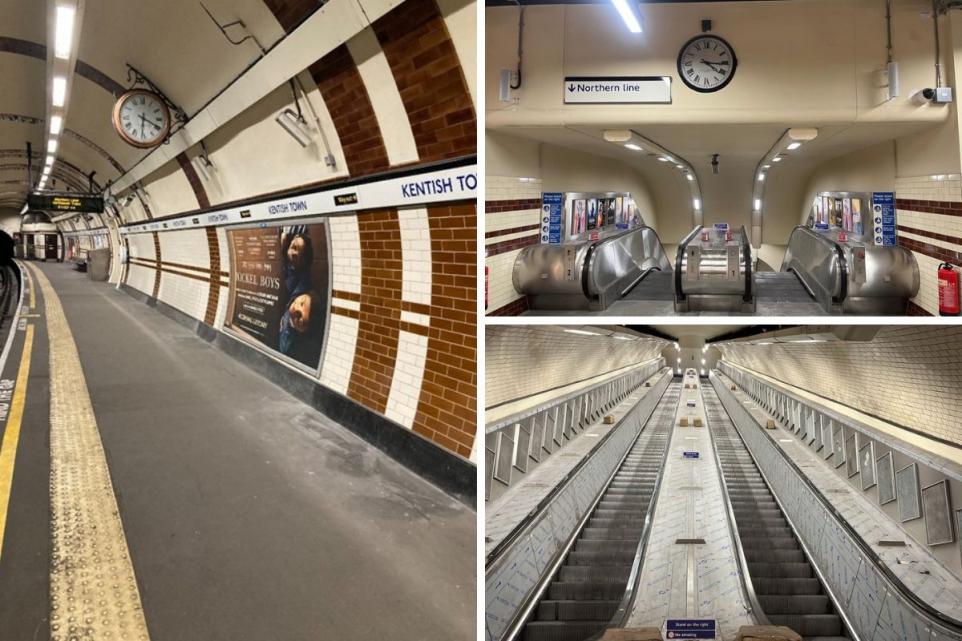
Kentish Town Underground Station re-opens today

Collage photo.
Left: View of platform at Kentish Town Station, showing restored tiles.
Top right: View of top of the escalators, showing original clock.
Bottom right: View from the bottom of the escalators, looking up.
Images courtesy TfL

Today, Monday 23 December 2024, Kentish Town Underground Station has re-opened.

New escalators have been installed, new ticket gates installed, and much of the station repaired and repainted.

While the Thameslink Station has remained open throughout, the Underground Station was closed in summer 2023, and had been due to re-open in summer 2024.

The re-opening was delayed until now because of unforseen problems, and even now is not completely finished. The internal link to the Thameslink Station is due to re-open early next year, and new ticket machines still need to be installed.

Congestion Charge is 20 years old

The once-controversial Congestion Charge is twenty years old!

It was a world-leading scheme and has lead to similar schemes being set up around the world. It initially had a significant impact and reduced traffic in central London by about 30%. This has gradually increased over the years, but is probably only now getting back to the levels that were being experienced before the Congestion Charge was introduced.

The Congestion Charge scheme formed the basis for the newer ULEZ (Ultra Low Emissions Zone) which is due to be extended to the whole of London later this year. In central London, the ULEZ has enabled a significant improvement in air quality. In some ways, the ULEZ is instead of a Congestion Charge for outer London, as a car is more necessary in the outer suburbs. It could be argued that it is more effective to improve air quality by reducing everyone’s vehicle emissions, than to just try to reduce the number of vehicles on the road.

https://tfl.gov.uk/info-for/media/press-releases/2023/february/congestion-charge-marks-20-years-of-keeping-london-moving-sustainably

https://en.wikipedia.org/wiki/London_congestion_charge