There is a lot of history just quietly sitting all around us. It’s there, you just need to know where to look.
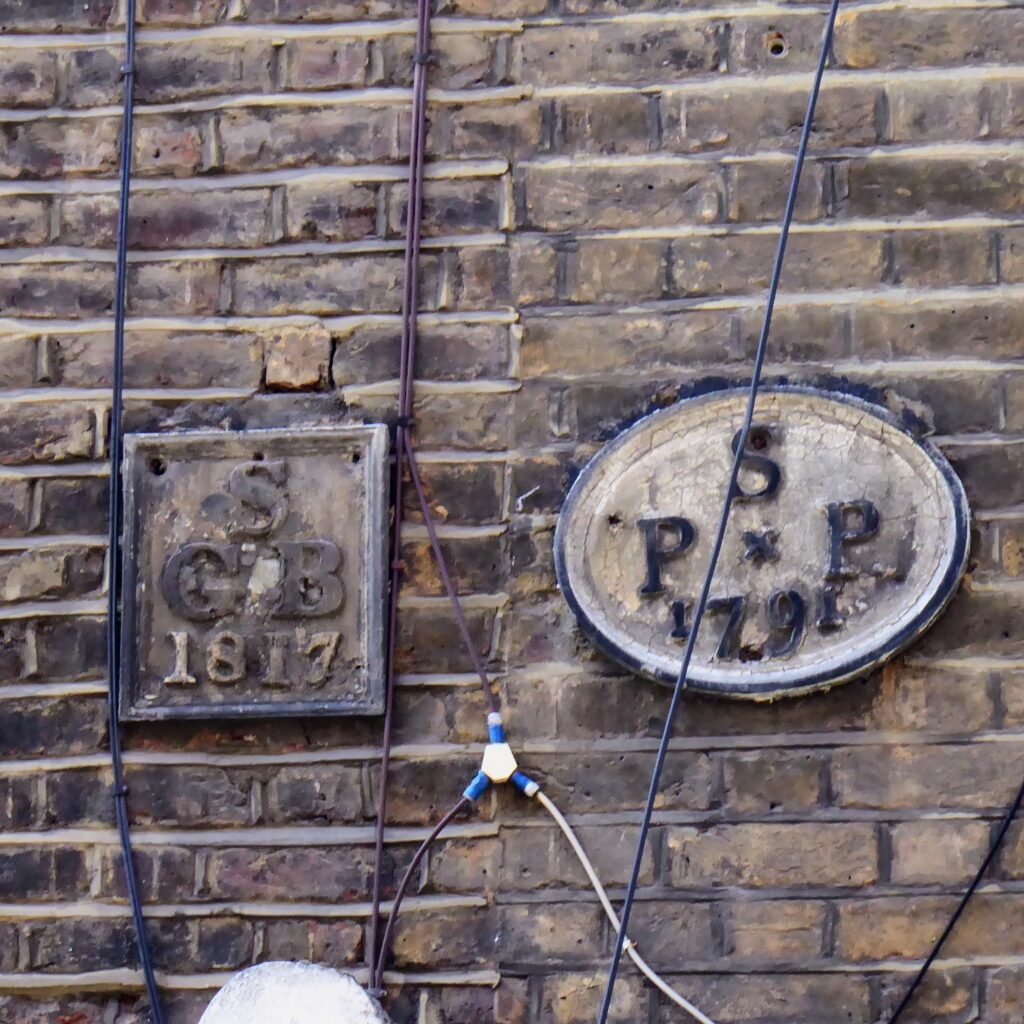
This photo, taken on Marchmont Street, shows two plaques on the wall. They mark an old church parish boundary, which used to be roughly equivalent to old local government boundaries.
The one on the left represents St George’s Church Bloomsbury, while the one on the right is St Pancras.
These links give a lot more information on the boundary markers, and the wide variety they come in.
Friday 20 March is Nowruz, the Iranian or Persian New Year celebration. It marks the start of the New Year on the (northern hemisphere) Spring Equinox.
I say Persian, because Nowruz is not only celebrated in Iran (ancient Persia), but in the wider cultural area. Nowruz is also important in Azerbaijan, Afghanistan, Albania, Armenia, Georgia, Turkmenistan, Kazakhstan, Uzbekistan, Tajikistan, Kyrgyzstan, parts of Syria, Turkey and Iraq. It is also celebrated among the Parsis of India, and, of course, by diaspora communities around the world.
It is perhaps especially poignant this year, given current events.
Tonight is Bonfire Night, when many people set off fireworks, and some people light bonfires. But why?
Remember, remember the fifth of November, Gunpowder, treason and plot. I see no reason Why gunpowder treason Should ever be forgot.
On 05 November 1605, a group of men led by Guy Fawkes were captured putting barrels of gunpowder underneath the House of Lords, to try to blow up Parliament and kill the Protestant King James I, and replace him with a Catholic king.
Thursday 08 May marks 80 years since the end of World War 2 in Europe.
This weekend happens to be the Spring Bank Holiday weekend, so there are going to be plenty of official and community commemorations.
Official events include:
British flags draped on the Cenotaph on Whitehall (from Monday 05 May)
A flypast by military aircraft, including the Red Arrows (on Monday 05 May)
Historic landmarks across the UK illuminated (on Tuesday 06 May)
A special service at Westminster Abbey (on Thursday 08 May)
The sea of red poppies returns to the Tower of London (from Monday 05 May)
A street party on Camden High Street (Monday 05 May)
While people will obviously be remembering the surrender of the Nazi regime in Germany, World War 2 would continue in the Pacific for three more months, until the Japanese surrendered after they were attacked with atomic bombs at Hiroshima and Nagasaki.
Today, 8 March, is International Women’s Day (IWD). This day celebrates the achievements of women, and also calls for equality between men and women.
One of the early feminist philosophers, in the 1700s, was Mary Wollstonecraft (1759-1797), who spent the last months of her life in Somers Town.
She is best known for A Vindication of the Rights of Woman, published in 1792. She argues that women are not naturally inferior to men, but are only held back by lack of education. She suggests that both men and women should be treated as rational beings. These were radical ideas for the time.
Mary also lived an unconventional lifestyle. When she was 15, she met Fanny Blood, who seems to have been the love of her life. Mary and her sisters, and Fanny, set up a school in Newington Green which included accomodation for women and their children. This school failed in 1785 when Fanny married and moved to Portugal, and Mary left to nurse Fanny during her pregnancy. Mary was devasted when Fanny died in childbirth.
In 1787 Mary decided to make a career as a writer, another radical move for a woman at th time. She spent a lot of time in France between 1790 and 1795, observing on the progress of the French Revolution. While in France she had an affair with American adventurer Gilbert Imlay, and had a daughter, Fanny (named after her dead friend), in 1794.
in 1796, Mary started a relationship with philosopher William Godwin, and they got married in early 1797, after which they moved into a flat in the Polygon Building , Somers Town. The building no longer exists, but it is remembered in Polygon Road.
Later in 1797 Mary gave birth to a second daughter, also called Mary. Mary Wollstonecraft died from an infection as a result of the birth. She was buried in the churchyard of St Pancras Old Church, where there is still a memorial to her.
Mary Wollstonecraft Godwin’s remains were moved to Bournemouth in 1851.
Mary’s daughter Mary would later marry the poet Percy Bysshe Shelley, and, as Mary Shelley, became famous as the author of Frankenstein.
Today, 27 January 2025, marks 80 years since the Auschwitz concentration and extermination camp was liberated from the Nazis’s, and the more than 7000 prisoners remaining there were freed.
The battle-hardened soldiers who freed the prisoners were shocked by what they saw. And the scene was repeated all across Nazi-occupied Europe.
Even today, Auschwitz remains an example of the evil things that people can do to other people.
The Auschwitz Museum works to preserve the memory of those died, the brutality of what wa done there, and to educate people so that it doesn’t happen again.
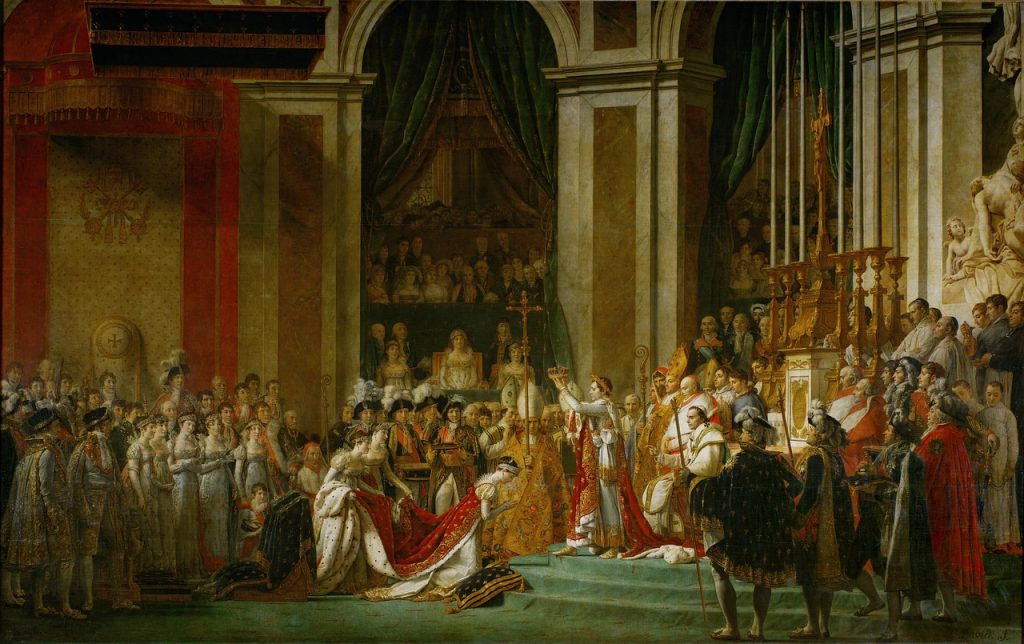
This Saturday, in a lavish ceremony, King Charles III will have a crown officially placed on his head, a ceremony known as the Coronation.
These days, it is only a formality, because Charles became King automatically when his mother Queen Elizabeth II died, a process known as accession. Some other countries don’t even have coronation ceremonies at all.
But back when kings had armies, a coronation was confirmation that the institutions of state supported that person, and was confirmation that the person ruled the country. Real power did not start until after they had been formally crowned.
The military parade showed that the army supported the ruler.
The anointing and blessing showed that the ruler had the support of the religious institutions, and through them, the support of God.
The details have changed, but this ceremony is a descendent of coronations in Ancient Egypt, the Bible, the Roman Empire, and the Middle Ages.
Magna Carta was signed on 15 June 1215 at Runnymede near Windsor by King John and his Barons.
It promised the protection of church rights, protection for the barons from illegal imprisonment, access to swift justice, and limitations on feudal payments to the Crown, to be implemented through a council of 25 barons. This council would later develop into Parliament.
The British Library has two original copies that are now more than 800 years old.
Learn about #MagnaCarta as Monty Python’s Terry Jones takes us back to medieval England in 1215 under the reign of Bad King John. Why was the charter originally created? And how is it relevant today? #MagnaCartaDay