Defra Report says London’s air is cleaner than ever

A report released last month by Defra (the Department for Food, Envionment & Rural Affairs) has shown that levels of NO2 pollution in London have fallen to within legal limits for the first time ever.

NO2 irritates the lungs, and may increase lung infections. It makes asthma worse, and contributes to higher death rates overall.

The report shows that levels for all types of pollutants have massively reduced since 1990 with measures such as using unleaded petrol, and closing all coal-fired power stations helping people across the country.

Recent reductions in London since 2020 are being put down to the impact of the ULEZ (Ultra Low Emission Zone), where people are charged extra if they drive a badly polluting vehicle into London. By some measures, London’s air is now cleaner than in some other major UK cities like Manchester, Liverpool and Bristol.

This is a link to the announcement from the Mayor of London:

This is a link to the actual report (the report covers the whole of the UK):
Air Pollution in Camden

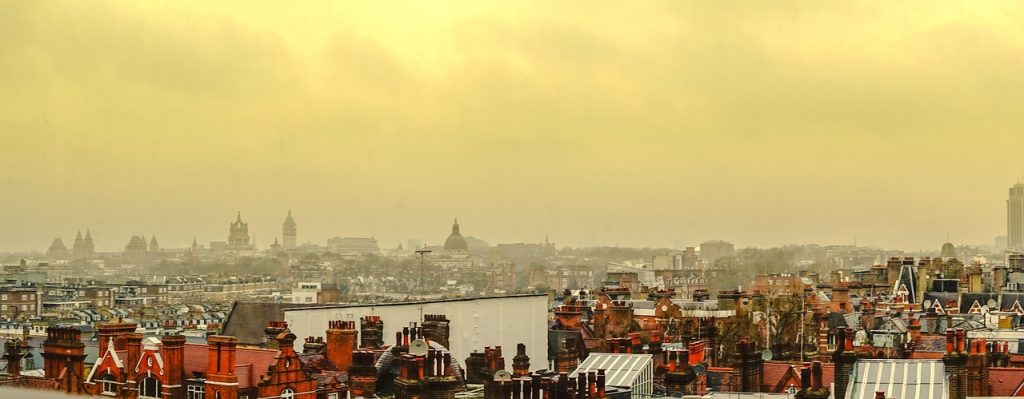
View of hazy London skyline.
Image by Dan Jones from Pixabay

Recent research has shown that more air pollution is now being generated by heating systems than traffic in central London.

Air quality measurements at the BT Tower has shown that nitrogen oxides NOx pollution has dropped since the introduction of the ULEZ (Ultra Low Emission Zone), and that air quality has improved.

Since pollution from traffic has dropped, pollution from heating is now a much larger component. About 70% of the NOx in central London is estimated to be produced by gas boilers.

Air pollution in central London is still higher than WHO (World Health Organisation) recommendations.

NOx is a pollution component caused by burning fossil fuels. It contributes to pollution smog over cities, as well as acid rain. NOx is a common asthma trigger, and might contribute to other health problems.

Below is a link to a technical paper in the journal Environmental Science & Technology.

Camden Council Consultation – Canal Boat Smoke

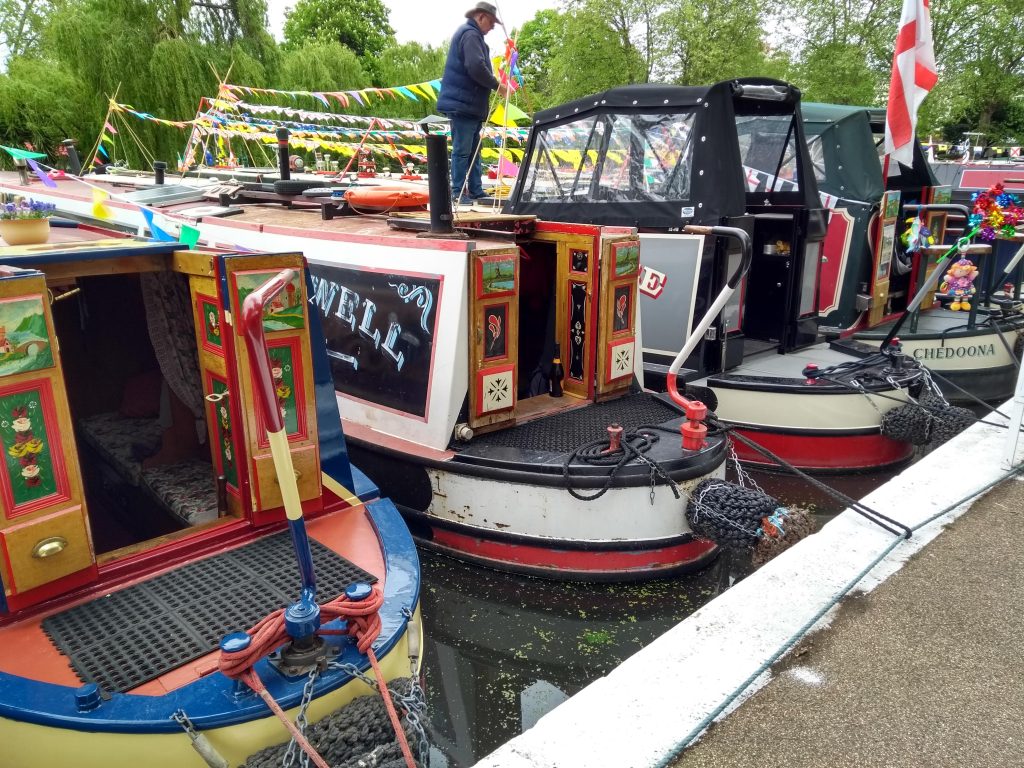
Decorated canals boats moored at Little Venice
Canal Cavalcade, Little Venice, 2019. Photo courtesy of dperris.

Camden Council want to include all the canal boats in a new Smoke Control Order.

Starting in the 1950s, parts of Camden were designated as “smoke control areas” with restrictions on smoke from chimneys.

Since 2000, the entire borough has been designated as a smoke control area, with it applying to every building in Camden. The boats on the canal were explicitly excluded from this.

Until 20 March 2025, there is a consultation open for comments on the proposal to now include all the boats on the canals.

Congestion Charge is 20 years old

The once-controversial Congestion Charge is twenty years old!

It was a world-leading scheme and has lead to similar schemes being set up around the world. It initially had a significant impact and reduced traffic in central London by about 30%. This has gradually increased over the years, but is probably only now getting back to the levels that were being experienced before the Congestion Charge was introduced.

The Congestion Charge scheme formed the basis for the newer ULEZ (Ultra Low Emissions Zone) which is due to be extended to the whole of London later this year. In central London, the ULEZ has enabled a significant improvement in air quality. In some ways, the ULEZ is instead of a Congestion Charge for outer London, as a car is more necessary in the outer suburbs. It could be argued that it is more effective to improve air quality by reducing everyone’s vehicle emissions, than to just try to reduce the number of vehicles on the road.

https://tfl.gov.uk/info-for/media/press-releases/2023/february/congestion-charge-marks-20-years-of-keeping-london-moving-sustainably

https://en.wikipedia.org/wiki/London_congestion_charge