Paste my profile into the search field of your favorite open social app or platform.
Your Profile
Or, if you know your own profile, we can start things that way! Why do I need to enter my profile?
This site is part of the ⁂ open social web, a network of interconnected social platforms (like Mastodon, Pixelfed, Friendica, and others). Unlike centralized social media, your account lives on a platform of your choice, and you can interact with people across different platforms.
By entering your profile, we can send you to your account where you can complete this action.
A recent drama series on the BBC, Reunion, followed the story of man recently released from prison, and his struggles to fit back into his family and society at large.
The twist is that the man is deaf, and he went to prison for killing his deaf best friend.
Not only is it a very good drama, it also shows many of the struggles of Deaf people. These range from the major struggles to access necessary interpreting services, historical abuse in sign-medium schools, isolation in a hearing-biased society, to not knowing that your car’s engine is about to overheat.
It’s not all doom and gloom. Along the way, you get a sense of how Deaf people experience music (through the vibrations in their bodies, and also the range and depth of expression that is possible with sign language.
World Asthma Day was created by the World Health Organisation (WHO) to publicise the negative effects that asthma can have, especially for people in the developing world who may not have access to the medicines that they need.
Asthma affects about 260 million people around the world, and about 450 thousand people die from asthma every year.
If everyone had access to the effective medications that are available, then most of these deaths would be prevented.
Today, 27 January 2025, marks 80 years since the Auschwitz concentration and extermination camp was liberated from the Nazis’s, and the more than 7000 prisoners remaining there were freed.
The battle-hardened soldiers who freed the prisoners were shocked by what they saw. And the scene was repeated all across Nazi-occupied Europe.
Even today, Auschwitz remains an example of the evil things that people can do to other people.
The Auschwitz Museum works to preserve the memory of those died, the brutality of what wa done there, and to educate people so that it doesn’t happen again.
Yesterday was the summer solstice, when the day is the longest and the night is the shortest. Some people regard it as the true start of summer.
From now on, the days will get progressively shorter, although the long days of sunshine mean that the temperature will (hopefully!) rise during the summer.
The Mayor of London, Sadiq Khan, together with Transport for London, has announced that the various parts of the London Overground train network will get their own names and colours.
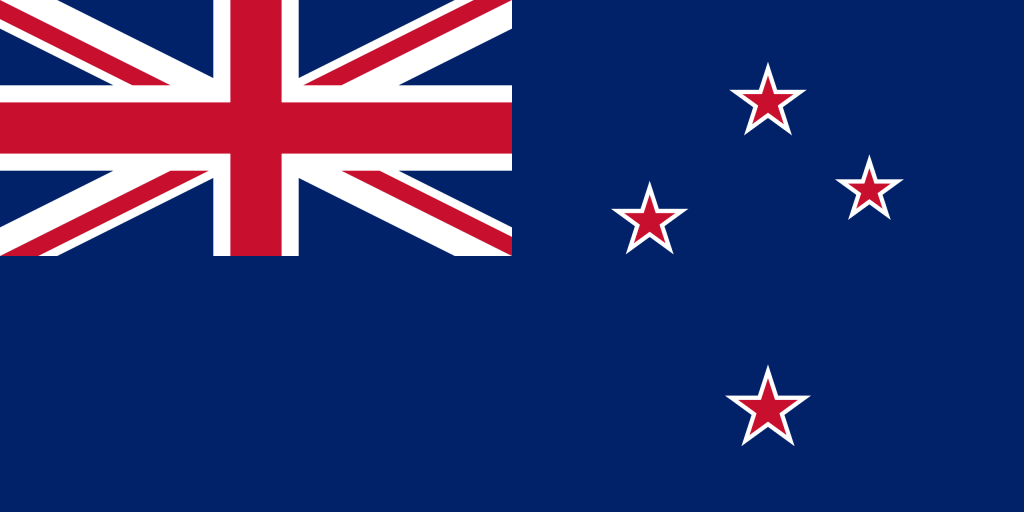
Today, 06 February, is Waitangi Day. Waitangi Day celebrates the signing, in 1840, of the Treaty of Waitangi between the British Crown and the Māori chiefs of New Zealand.
Celebrations include memorial services at Waitangi, and local services around New Zealand. It is also an opportunity for non-Māori (or Pākehā) to experience Māori culture.
In the Treaty of Waitangi, the chiefs agreed to being ruled by the British, the chiefs would keep possession of their lands and other properties, the British government would have the right to buy land from the Māori, and that the Māori people would have the same rights as other British subjects.
As colonisation by Europeans progressed, disputes arose and the Britishand colonial governments abused or ignored the treaty as it suited them.
Real efforts to revive the treaty only started from the 1930s, the first Waitangi Day was celebrated in 1934, and became a national public holiday in 1974. More recently, the New Zealand government has begun to negotiate settlement of claims for historic breaches of the Treaty, going back to 1840.
Sunday 11 February is International Women in Science Day, a United Nations initiative to recognise and promote the participation of women in science.
Women have often had to fight to be allowed to even participate in science, and then had to fight even more to have their work properly recognised.
But women have always contributed to science, from nameless doctors and midwives throughout time, to individuals such as Hypatia of Alexandria (astronomy, mathematics), Hildegard of Bingen (botany), Ada Lovelace (mathematics, computer science), Marie Curie (physics and chemistry), Rosalind Franklin (chemistry, genetics), through to recent Nobel Prize winner Anne L’Hullier (physics).
So this UN International Day seeks to reduce the inequality, and expand the role of women in developing the sustainable future that we need.
Today, 27 January, is Holocaust Memorial Day. This is a day to think about all the victims of genocide.
On this day in 1945, the Allied forces liberated the Auschwitz concentration camp, and showed the world what was going on there, and in the other similar camps across Nazi Germany. More than 1 million people were killed just at Auschwitz. Six million Jewish people were killed by the Nazis, and millions more from other persecuted groups.
Since then, many more people have been killed in genocides in Cambodia, Rwanda, Bosnia and Darfur. And today you can see how fragile the freedoms we enjoy really are.